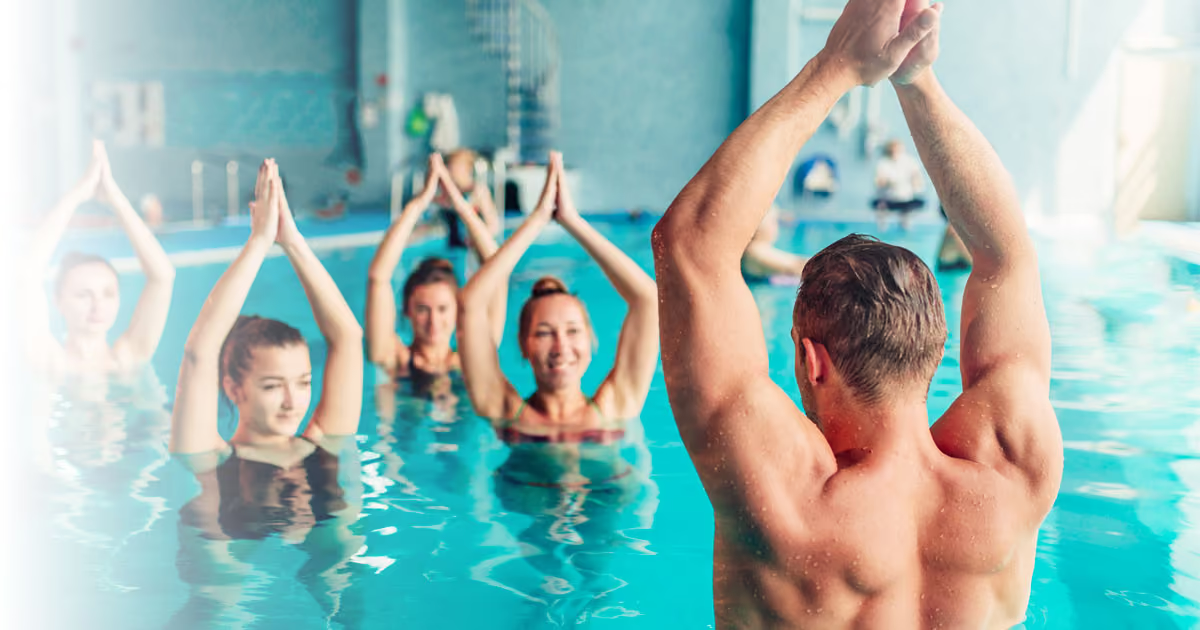
Whether you’re new to a pool workout, coming back after a break, or already moving in the water regularly - there are a few key things to understand before you dive in.
Because a great water workout isn’t just about getting in the pool - it’s about learning how to work with the water.
And once you do, everything starts to feel more effective, more fluid, and more connected.
These simple guidelines will help you train smarter, stay safe, and get the most out of your time in the pool.
1. Body & Water Temperature
Water temperature plays a bigger role in your pool workout than most people realize.
Unlike land-based training, where heat builds up quickly, water continuously pulls heat away from your body. This helps regulate your temperature and allows you to exercise more comfortably - even at higher intensity.
That’s one of the biggest advantages of a water workout:
you can move, sweat, and challenge your body without feeling overheated.
But temperature can also work against you.
If the water is too cold, your body shifts into protection mode - sending blood toward your core to keep vital organs warm. As a result, your muscles may feel tight, your range of motion decreases, and your risk of cramps or strain increases.
On the other hand, water that is too warm may feel pleasant at first, but can lead to fatigue and make it harder to sustain a more dynamic workout.
What’s the Ideal Pool Temperature?
- 83°–86°F (28°–30°C) → ideal for most pool workouts
- ~90°F (32°C) → better for gentle, therapeutic sessions (Aqua Pilates, stretching)
- Below 78°F (26°C) → too cold for effective training
If you tend to feel cold easily, consider wearing simple thermal support like a neoprene vest or long-sleeve swimwear to help maintain body heat during your workout.
How to Adjust to the Water
Your body needs a moment to transition from air to water.
Instead of jumping straight into intense movement, begin with a gradual warm-up:
- start with larger, flowing movements
- keep your body moving continuously
- allow your breathing and circulation to adapt
Mor’s Tip: Your body cools down quickly in the water - even during short pauses. Keep moving, especially at the beginning, to build warmth from within. Start with a warm-up using big, flowing movements.
2. Pool Depth Matters More Than You Think
The depth of the water changes everything - from intensity to control to how your body moves.
It affects your:
- stability
- range of motion
- intensity
- and overall control
Choosing the right depth helps you move with confidence and get the most out of each exercise.
At a glance:
In shallow water → more control, more grounded movement
In deeper water → more buoyancy, less stability
When the depth is right, your body can move freely, safely, and with better alignment.
Let’s break it down:
Shallow Water Training
Most pool workouts are done in shallow water, where your body is submerged between your chest and armpits.
- Ideal depth: 3.5–4.5 ft (1–1.4 m)
- Best for: walking, jogging, strength, and controlled movements
At this depth, you have enough support from the water while still maintaining control over your body.
If the water is too shallow (around waist level or below), you’ll place more stress on your joints and lose the full benefit of water resistance.
If it’s too deep (above armpit level), your movements may feel unstable and harder to control.
Remember:
Too shallow? → more joint impact
Too deep? → less control and stability
Mor’s Tip:
Start where you feel stable and supported. Confidence in the water builds gradually - and that’s part of the process.
Find Your Stable Ground
Most pools have a gradual slope between the shallow and deep ends.
When your feet are on the floor, choose a flat area (not an incline) so you can stand evenly and maintain proper alignment.
Even a slight slope can affect your posture and make movements feel off.
Mor’s Tip:
When you feel stable, your body can relax into the movement - and that’s when your workout becomes more effective.
Deep Water Training
Deep water workouts are a completely different experience.
Your body is suspended vertically, usually supported by flotation.
- Ideal depth: 6 ft (1.8 m) or deeper
- Your feet should not touch the bottom
This type of aqua workout challenges your core, balance, and coordination in a deeper way - but it also requires more body awareness and control.
Mor’s Tip:
Feeling safe in the water is just as important as the workout itself. If you’re unsure about deep water, take your time. Build confidence in shallow water first, then progress when you feel ready.
3. Water Works Differently Than Land
You can’t simply take your gym workout and bring it into the pool.
Water changes everything; how your body moves and how your muscles work.
On land, your body mainly works against gravity.
In the water, you’re working against constant resistance while being supported at the same time.
That combination is what makes a pool workout so unique - and so effective.
Resistance: Why Water Feels So Challenging
Every movement you make in the water meets resistance. Water is about 800 times denser than air, which means even simple movements can feel more intense.
This resistance comes from the water’s viscosity - its natural thickness - which creates what’s known as drag.
Drag is the force you feel as the water pushes against your movement.
The faster you move, the more drag you create.
The more surface area you use (arms, legs, equipment), the greater the resistance.
This is what makes a pool workout so effective - your muscles are working through resistance in every direction, not just against gravity.
Mor’s Tip:
Instead of rushing through movements, try changing your speed or range. Small adjustments can completely change the intensity.
Buoyancy: Support Without Impact
One of the biggest benefits of a water workout is buoyancy — the feeling of being supported by the water.
Depending on how deep you are:
- Waist level → about 50% of your body weight is supported
- Chest level → about 65–75% supported
- Neck level → up to 90% supported
This is why pool workouts are ideal if you want to reduce joint stress while still building strength, especially if you’re recovering from injury or looking for low-impact training.
But more buoyancy also means less control - especially in deeper water.
As you go deeper, your body has to work harder to stay aligned and controlled, especially through your core.
Alignment Changes Everything
Just like on land, your posture matters - maybe even more in the water.
Good alignment = better results + lower risk of injury
If your body feels unstable or misaligned, reduce intensity and return to basics.
Because the water supports your body, it’s easy to move without noticing how you’re positioned. But when your alignment is off, your muscles don’t work efficiently and the benefits of your workout decrease.
Good alignment helps you:
- move with control
- engage the right muscles
- reduce unnecessary strain
- and get better results from every exercise
Whether you’re standing in shallow water or floating in deeper water, your posture should feel long, stable, and connected. Think of creating length through your spine, gently engaging your core, and allowing your movement to stay relaxed - yet active.
Mor’s Tip:
If your movement starts to feel off, pause and reset your posture. A small adjustment in alignment can completely change how the exercise feels.
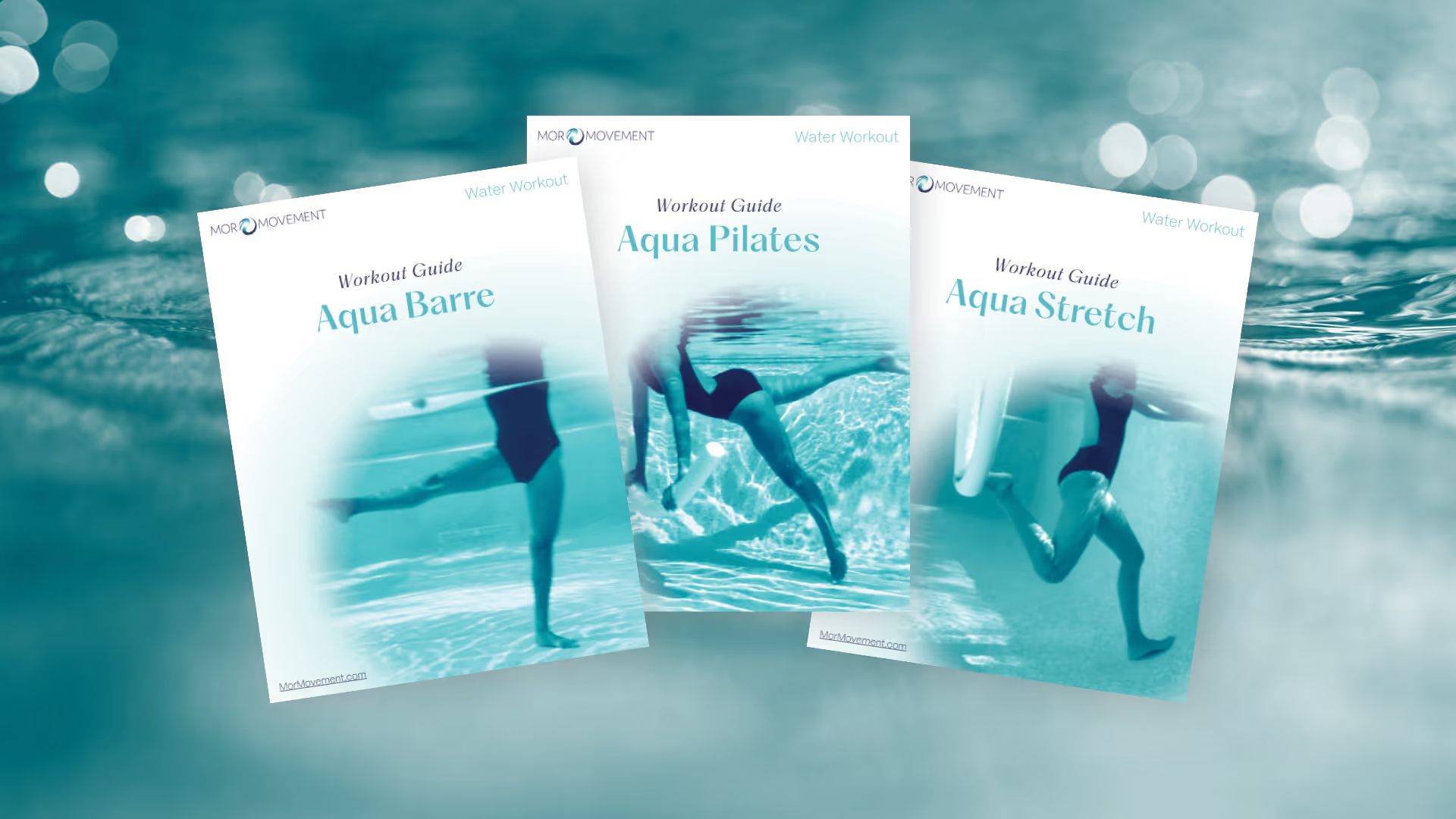
The Aqua Collection
A beautifully designed 3-part printable collection featuring Aqua Pilates, Aqua Barre, and Aqua Stretch - thoughtfully structured for strength, mobility, and graceful movement in the water.
Before You Jump In
A pool workout is one of the most powerful ways to train your body - but it works differently than anything you do on land.
When you understand how temperature, depth, and water resistance affect your movement, everything begins to feel more natural and connected.
The water isn’t something you fight against - it’s something you learn to move with. As you begin to trust that support, your movements become smoother and your body responds more efficiently.
Start where you feel comfortable. Move with intention, and stay aware of how your body feels as you go.
When everything begins to come together - your breath, your movement, and the support of the water -
that’s where the magic happens.
Pool Workout FAQ
What is a pool workout?
A pool workout (also called a water workout or aqua workout) is a form of exercise performed in the water. It combines strength, cardio, and mobility training while using the natural resistance and support of water to reduce impact on the joints.
Is a pool workout effective for fitness?
Yes! a pool workout can be highly effective. Water provides constant resistance, which helps strengthen muscles, while buoyancy reduces stress on joints. This makes it a great option for building strength, improving endurance, and supporting overall fitness.
What is the best depth for a pool workout?
For most pool workouts, the ideal depth is between chest and armpit level. This allows you to stay stable while still benefiting from water resistance. Deep water workouts require flotation and are better suited for more advanced training.
What temperature should the pool be for a workout?
The recommended pool temperature for a workout is between 83°–86°F (28°–30°C). Cooler water may feel uncomfortable and limit movement, while warmer water is better for gentle or therapeutic sessions.
Do I need equipment for a pool workout?
No. You can get an effective pool workout using just your body. However, equipment like pool noodles, hand buoys, or resistance tools can increase intensity and add variety to your routine.
Is a pool workout good for beginners?
Absolutely. A pool workout is beginner-friendly because the water supports your body and reduces impact. You can start in shallow water, move at your own pace, and gradually build confidence and strength.
Can I lose weight with a pool workout?
Yes! Absolutely! A consistent pool workout can help with weight loss by combining cardio and resistance training. The key is staying consistent and gradually increasing intensity as your body adapts.
Is a pool workout better than gym workouts?
It depends on your goals. Pool workouts are excellent for low-impact training, joint support, and full-body resistance. Gym workouts may allow for heavier strength training. Many people benefit from combining both.
Still have questions?
If you have any questions about the workouts, guides, or anything on the site, feel free to get in touch.