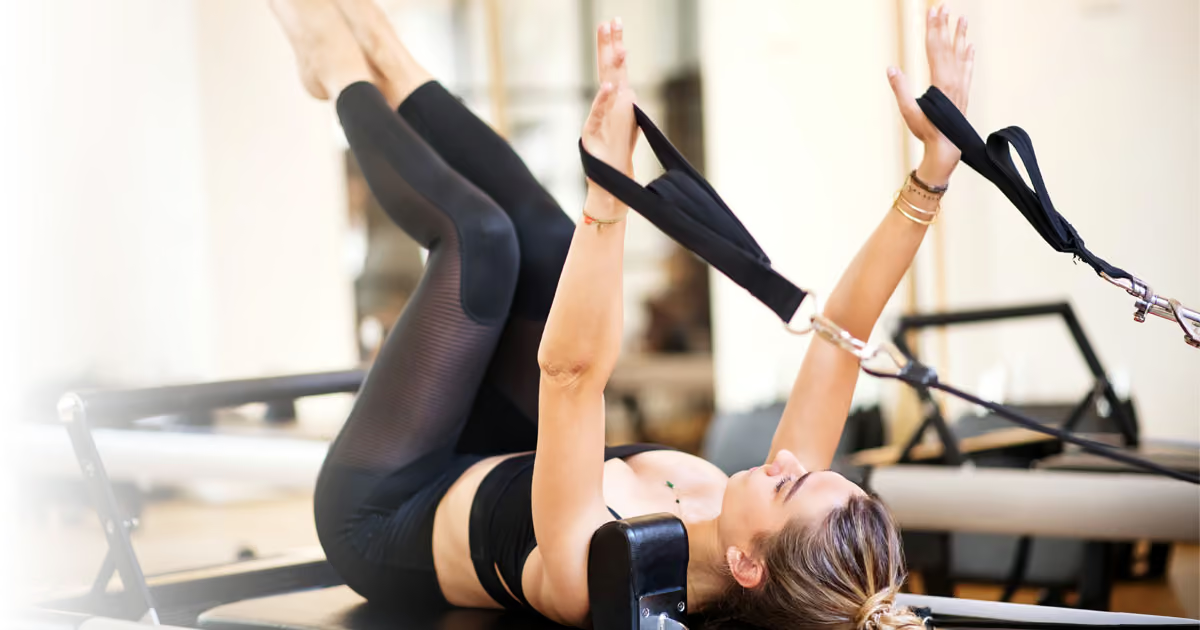
So… what is Pilates, really?
If you’ve seen it in studios, online workouts, or heard people talk about “core” and “control,” you might be curious what makes Pilates so special and why it’s become so popular.
In this guide, I’ll break it down for you in a simple, clear way and help you understand why Pilates is one of the most effective methods for building strength, balance, and body awareness.
A Little History: Where Pilates Began
The Pilates method was developed in the early 1920s by Joseph Pilates.
He was truly ahead of his time.
Long before modern fitness trends, he understood something powerful: the body and mind must work together for true health and strength.
Originally, he called his method “Contrology” - the art of controlling your body with your mind.
Today, Pilates has evolved into a global movement. You’ll find it everywhere: studios, physical therapy clinics, online classes, and even in rehabilitation programs.
What Is Pilates, Really?
At its core, Pilates is a mind-body movement method that teaches you how to move better, not just harder.
It focuses on building strength from within - starting with your deep core muscles while improving posture, flexibility, and overall body awareness.
But what makes Pilates truly different is how the body works during each movement.
In Pilates, we train the body to move from the inside out - initiating every movement with the deep stabilizing muscles first, and then allowing the larger, more superficial muscles to follow.
This is actually how the body is designed to function in every movement - but most people lose this natural pattern over time.
And this, in my opinion, is one of the biggest contributions of Pilates. It helps people truly rediscover their core muscles.
Once you build that awareness, everything changes. Your movements become more controlled, more supported, and more efficient - not just during your Pilates practice, but in everything you do.
Whether you’re working out, lifting weights, or simply going through your day, your body starts to move with more balance and ease.
Pilates isn’t just about exercise. It’s about reconnecting with your body and learning how to use it the way it was meant to move.
The Core Principles of Pilates
Pilates is built on 6 key principles that guide every movement:
1. Breathing
Breath is everything in Pilates. Deep, controlled breathing helps oxygenate the body, support movement, and create flow.
2. Centering
All movement begins from the core - your “powerhouse.” This creates stability and control in every exercise.
3. Concentration
Pilates is mindful movement. You stay present and focused, which improves both your practice and daily movement.
4. Control
Every movement is intentional. No rushing, no momentum - just full control of your body.
5. Precision
It’s not about doing more - it’s about doing it right. Small adjustments make a big difference.
6. Flow
Movements are smooth, connected, and graceful - creating a rhythm throughout your workout.
What Are the Different Types of Pilates?
One of the reasons Pilates is so popular is its versatility.
You can practice it in different ways depending on your goals and preferences - mainly Mat Pilates and Reformer Pilates.
If you’re not sure which one is right for you, check out my full guide to the difference between Reformer and Mat Pilates in my article: Pilates Reformer vs Mat: Which Is Better for Your Goals?
Mat Pilates
Mat Pilates is performed on a mat using your body weight, sometimes with small props such as a Pilates ring, mini ball, or resistance bands.
This is the most accessible form of Pilates and perfect for home workouts.
Equipment Pilates
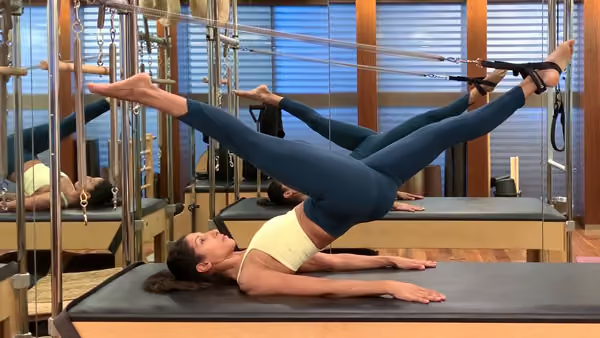
Equipment Pilates uses specialized machines originally designed by Joseph Pilates, such as the Reformer, Cadillac, Chair, and Barrel.
These machines use spring-based resistance, adding both support and challenge to your workout.
Why Pilates Is So Effective
Pilates is all about quality over quantity.
It’s not about doing more repetitions - it’s about moving with intention.
Instead of rushing through exercises, you focus on:
- Proper alignment
- Controlled, precise movement
- Coordinating each movement with your breath
This approach turns even the simplest exercise into a powerful, full-body experience.
You’re not just working muscles - you’re training your body to move in a smarter, more efficient way.
Over time, this leads to real, lasting results:
✔ Strength
✔ Flexibility
✔ Balance
✔ Better posture
✔ Deeper body awareness
And perhaps most importantly - you begin to feel more connected to your body, both during your workouts and in everyday life.
Who Is Pilates For?
One of the most beautiful things about Pilates is that it truly is for everyone.
It’s great for:
- Beginners starting their fitness journey
- People recovering from injury
- Athletes wanting to improve performance
- Pre- and postnatal women
- Anyone looking to move better and feel stronger
From my experience teaching and practicing Pilates for over 15 years - I can honestly say:
👉 Pilates meets you exactly where you are.
So… What Is Pilates? (Final Thoughts)
Pilates is more than just exercise.
It’s a method that helps you:
- Understand your body
- Move with intention
- Build strength from within
- Feel more connected, balanced, and energized
Whether you’re just starting or deep into your movement journey - Pilates gives you tools that stay with you for life.
Ready to experience it for yourself?
Start simple, stay consistent… and let your body guide you.
What Is Pilates? - FAQ
What is the difference between Pilates and yoga?
While both focus on mind-body connection, Pilates is more focused on core strength, muscle control, and movement precision. Yoga often includes more stretching, flow sequences, and a stronger emphasis on relaxation and meditation.
How often should I do Pilates?
For best results, aim to practice Pilates 2–4 times per week. Even short sessions can make a big difference when done consistently.
Can Pilates help with weight loss?
Pilates can support weight loss by building lean muscle, improving metabolism, and encouraging consistent movement. While it’s not a high-calorie-burning workout, it pairs very well with other forms of exercise for overall fitness.
Do I need equipment to start Pilates?
No. You can start with just a mat and your body weight. Small props like a Pilates ring or resistance band can add variety, but they’re not required for beginners.
What does Pilates do for your body?
Pilates strengthens your core, improves posture, increases flexibility, and helps your body move with better control and balance. Over time, it creates a stronger, more aligned, and more efficient body.
Still have questions?
If you have any questions about the workouts, guides, or anything on the site, feel free to get in touch.